
Market Report 27.02.2026
Osterhorn, Friday, 27.02.2026
The US $ in EURO: 1,1820
What happened this week
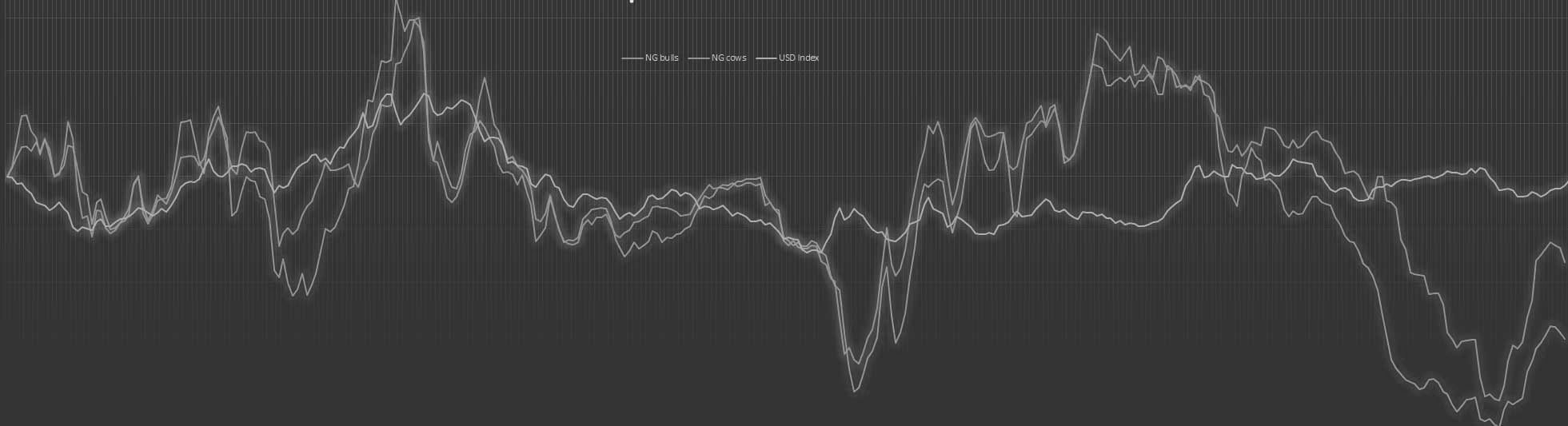
Another week has passed and, to be honest, we had certain expectations of a revival after the Chinese New Year holidays. Unfortunately, we have to say that this did not happen. The offices in Asia were back in operation and the administration and logistics departments were back at work, but we saw very little business activity on the part of tanners. The only thing we noticed at all was interest in shoe upper leather, a trend that we have been seeing more and more clearly for some time now. This applies not only to the Indian subcontinent, but there are also increasing enquiries for heifers and ox, which are mainly used for shoe leather in their weight classes and ranges. All this is still happening with considerable price pressure, so that the buyers‘ ideas and the possibilities of actually implementing them at the moment are almost impossible to realise. This resulted in a lively exchange, but in the end it did not lead to any actual sales. This price pressure, which essentially originates from leather product manufacturers is spreading anyway across all sectors, continues to be the main problem for the business. The weak dollar and general uncertainty regarding the American president’s future customs policy are turning all planning into a lottery at the moment anyway. In Europe, too, there was no noticeable change in the market situation. The only thing that can be said with certainty at this point is that the pressure on heavy and male hides continues to increase. We cannot repeat often enough that it is not actually a problem to find enough buyers for these goods; it is only their valuation within the current situation on the leather markets. So, when little is happening and there is little business activity, the rumour mill always flourishes. There are many rumours, and they are not really suitable for mention in a market report like this. Nevertheless, it should be noted that, at least in our opinion, there are increasing reports of noticeable delays in payments from European customers in isolated cases. This is, of course, not a good sign either, and if it does indeed prove to be true, it will not fail to leave its mark on the general market situation. Some are slowly preparing for their trip to Asia and, in addition to visiting the trade fair in Hong Kong, they will of course also be visiting some of their Asian customers as is traditional. This means that we will certainly have gathered more concrete facts by mid-March, enabling us to form a picture of the second quarter of 2026. As mentioned, there was not much to report on the business front, and the few transactions that did take place mostly involved lighter male hides. In the coming weeks, new price negotiations will also be held in Europe, and these will certainly not be any easier.
The kill
The kill figures are not changing significantly. The carnival season is certainly still having an impact, but the fact is that the extremely high livestock prices are slowly falling again, which is of course a clear symptom of the difficulties in implementing these prices in supermarkets. Whether a decline in the price of live cattle will encourage farmers to sell even more animals or, on the contrary, to hold them back, is something we will probably see in the coming weeks. We tend to think that volumes could increase again slightly for a few weeks.
What do we expect
At the moment, we cannot foresee any significant developments on the markets other than slightly stronger demand from Asia. The focus will naturally be on the new negotiations in Europe and whether there will be any change in the long-stable prices for heavy male cattle. We maintain that a revaluation may not be welcome, but it is ultimately overdue. The split market will also play a certain role in price developments. For all other grades, developments in Asia will certainly be decisive, and here it is possible that buyers will wait for visits from suppliers and then for meetings at the trade fair in Hong Kong before making any further purchasing decisions. At the moment, buyers are really only interested in how much stock there is and how high the sales pressure is from the major suppliers in America and Oceania and, to a certain extent, also from Europe.
Price Table
| Type | Weight range | Avg. green weight | Salted weight | Avg. weight salted | Price per kg | Trend |
|---|---|---|---|---|---|---|
| Ox | Heifers | 15/24,5 kg | 22,0/23,5 kg | 13/22 kg | 20/21 kg | € 0,80 | stable |
| 25/29,5 kg | 27,5/28,5 kg | 22/27 kg | 25/26 kg | € 0,60 | Stable | |
| Dairy cows | 15/24,5 kg | 22,5/23,5 kg | 13/22 kg | 20/21 kg | € 0,40 | Stable |
| 25/29,5 kg | 27,5/28,5 kg | 22/27 kg | 25/26 kg | € 0,50 | Stable | |
| 30/+ kg | 33,5/35,5 kg | 27/+ kg | 29/31 kg | € 0,50 | Stable | |
| Bulls | 25/29,5 kg | 27,5/28,5 kg | 22/27 kg | 25/26 kg | € 0,80 | Weakish |
| 30/39,5 kg | 36,0/37,0 kg | 24/34 kg | 31/33 kg | € 0,80 | Weakish | |
| 40/+ kg | 45,0/48,0 kg | 34/+ kg | 38/40 kg | € 0,85 | Weakish | |
| Thirds | 15/+ kg | 25,0/27,5 kg | 13/+ kg | 24/26 kg | € 0,40 | Stable |
| Thirds bulls | 30/+ kg | 38,0/40,0 kg | 24/+ kg | 33/36 kg | € 0,45 | Stable |