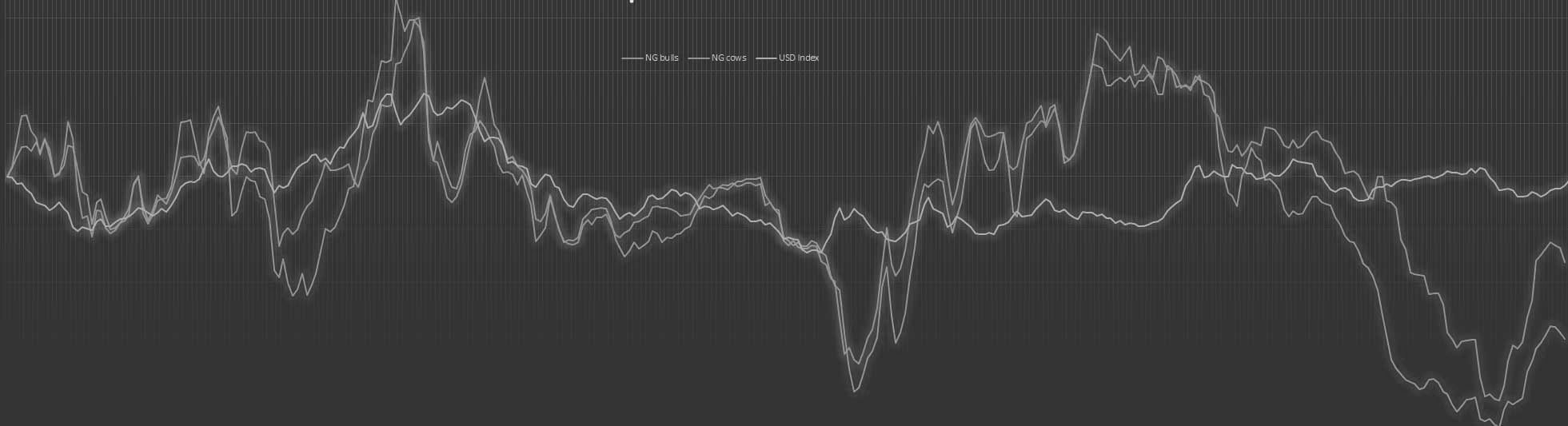

Market Report 03.04.2026
Osterhorn, Friday, 03.04.2026
The US $ in EURO: 1,1540
What happened this week
Early bird report due to the Easter break! In the end, this week turned out somewhat differently than one – or rather, we – had actually expected. Initially, this didn’t change much in terms of prices or hide sales, but events unfolded that may have a lasting impact on certain structures within the leather supply chain in Europe. First and foremost, geopolitical events continued to dominate. The weekly yo-yo effect on stock markets and commodity prices, triggered by the erratic and ambitious daily statements from the American President, continued this week as well. By now, one must almost assume that he holds corresponding long and short positions in the markets, as he knows exactly what he will present to the global public the very next day. No discernible strategy, however improbable and bizarre it may be, can be identified with the best will in the world. Nor can one not trace any magical master plan behind it all. Perhaps it does exist, but for the moment it is simply a war with dreadful consequences that affect humans directly on a daily basis and others who feel it in their lives in different ways. Uncertainty also plays a major role for our markets. Energy prices are rising, and inflation is likely to follow suit; it remains entirely unclear what conclusions consumers will draw from the current situation regarding their purchasing behaviour in the coming months. Whilst such events are normally interpreted as exclusively negative for our markets, fears of inflation and rising material prices could potentially have a rising price effect on oil-based alternatives. We will probably have to wait a little longer to see the effects of this, as well if and where chemical shortages might have an impact too. Back to events in Europe. Over the course of the week, rumours intensified that the ownership structures of two major contract tanneries are set to be reorganised. The issue is not new and has been on many people’s minds for some time, but it now appears that the decisions have finally been made. For raw hide suppliers, this does not change anything, as where, by whom or for what purpose the hides are bought and tanned ultimately makes no difference to the supplier, as long as they can deliver and their invoice is paid. What is interesting about the matter, however, is that in both cases the new owners are not investors with a background in the leather industry. In one case, it is a marketer of wetblue selections, and in the other, the business focuses on the supply and logistics services for raw materials for the collagen and gelatine industry. However, as contract tanning capacities are naturally also used by others, certain priorities may shift under the new owners. This would, of course, also have a significant impact on those it might affect. Time will tell what strategies and consequences can be derived from this, but if it all comes to pass, one could certainly say that this would represent a certain disruption in traditional leather manufacturing, as it would imply that alternatives to traditional full-stage leather production promise better results. If that is the case, then many will simply have to rethink their concepts and production processes. It is already the case today that many leather factories are no longer owned and operated by tanners, and that value creation in leather production plays a much lesser role in other supply chains, which would then have corresponding consequences for the leather manufacturer alone. Oh yes, there was business this week too. At least in that respect, we were spot on. Business in Europe was again rather modest, which is of course partly due to the public holidays. However, Asia was significantly more active this week, and deals were concluded in various Asian countries. Price negotiations remain challenging, and out of ten bids, only one ultimately results in a deal, but a few deals here and there add up to quite a bit in the end. Prices haven’t shifted much, and in the end, it came down to deciding which items one wanted to sell, whether to push for an extra dollar here or accept a dollar less there. It seems that one or two tanners in Asia are certainly considering that, given the geopolitical situation and possible further increases in logistics costs and delivery times, it would be better to build up raw material stocks a little to play safe. However, this has nothing to do with the leather demand, which remains quite difficult, with the continuing pressure on leather prices
The kill
Slaughter numbers have risen slightly in some areas, and prices for live cattle are beginning to fall. The low milk prices and the lack of demand for beef are becoming increasingly evident. These developments are hardly surprising, but this market has also a history of resisting the inevitable for far too long. Next week there will be one fewer slaughter day again, and the week after that will reveal what decisions the slaughter industry and farmers will draw from this situation. In principle, we believe that, due solely to the pressure to sell live cattle, slaughter numbers could initially rise slightly even as live cattle prices fall.
What do we expect
We believe and expect that prices will change relatively little next week as well. The immense selling pressure that has long weighed on the market seems to have eased somewhat, and therefore suppliers are unlikely to accept low(er) prices. We also consider it relatively unlikely that this will give rise to the courage to demand higher prices, or that there would actually be tanners willing to accept higher prices at this juncture. Consequently, with low turnover, the market is unlikely to change significantly for some time to come. Happy Easter!!
Price Table
| Type | Weight range | Avg. green weight | Salted weight | Avg. weight salted | Price per kg | Trend |
|---|---|---|---|---|---|---|
| Ox | Heifers | 15/24,5 kg | 22,0/23,5 kg | 13/22 kg | 20/21 kg | € 0,80 | stable |
| 25/29,5 kg | 27,5/28,5 kg | 22/27 kg | 25/26 kg | € 0,60 | Stable | |
| Dairy cows | 15/24,5 kg | 22,5/23,5 kg | 13/22 kg | 20/21 kg | € 0,50 | Stable |
| 25/29,5 kg | 27,5/28,5 kg | 22/27 kg | 25/26 kg | € 0,50 | Stable | |
| 30/+ kg | 33,5/35,5 kg | 27/+ kg | 29/31 kg | € 0,50 | Stable | |
| Bulls | 25/29,5 kg | 27,5/28,5 kg | 22/27 kg | 25/26 kg | € 0,80 | Stable |
| 30/39,5 kg | 36,0/37,0 kg | 24/34 kg | 31/33 kg | € 0,80 | Stable | |
| 40/+ kg | 45,0/48,0 kg | 34/+ kg | 38/40 kg | € 0,85 | Stable | |
| Thirds | 15/+ kg | 25,0/27,5 kg | 13/+ kg | 24/26 kg | € 0,35 | Stable |
| Thirds bulls | 30/+ kg | 38,0/40,0 kg | 24/+ kg | 33/36 kg | € 0,40 | Stable |